Santa Fe Pallet Rack
Pallet Racks in Albuquerque, NM
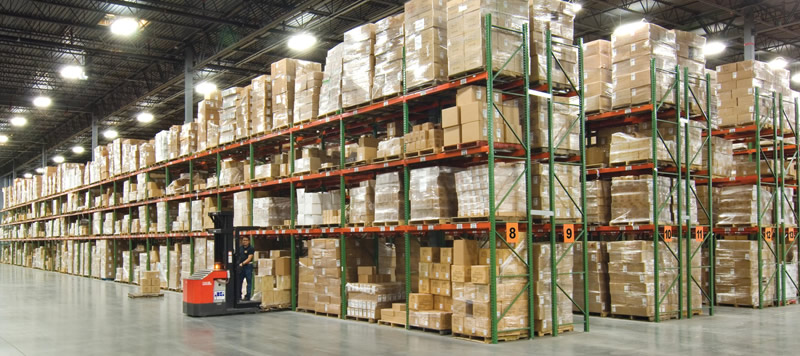
Pallet racks in Albuquerque, NM should match the inventory before they fill the building. Warehouse racking starts with pallet dimensions, the heaviest load, and the way your lift truck approaches each bay.
Journal Center, Westpointe40, and Mesa del Sol illustrate why rack height must follow actual building clearance. Whether the assignment favors direct access or deeper storage, the starting point remains the same: describe what moves, how often it moves, and which pallets must remain separately accessible.
Selective Pallet Racks in Albuquerque
Selective teardrop rack gives mixed inventory a straightforward home because each pallet position remains accessible from an aisle. Start by grouping loads with similar dimensions and handling needs. Then establish beam elevations around those loads rather than accepting a standard spacing that leaves unnecessary gaps or interferes with handling.
A common dimensional starting point is a 42-inch upright for a 48-inch-deep pallet. A 96-inch beam can accommodate two 40-inch pallets, while a 144-inch beam can accommodate three. The 108-inch option provides another beam length to evaluate. Final selection still requires confirmation of the complete load and handling arrangement.
Santa Fe Pallet Rack supplies new material and helps turn those details into a storage arrangement you can evaluate before ordering.
Pushback Rack for Deeper SKU Storage
Pushback pallet racking places two to six pallets deep in a lane and works on a last-in, first-out basis by SKU. That makes the number of pallets held per item as important as the overall pallet total. Filling deep lanes with small quantities of many items can undermine the intended storage arrangement.
Compare the depth of each lane with replenishment quantities and picking activity. Selective bays can retain access for varied items while pushback handles suitable repeated loads. Neither system should be selected on height alone; access requirements and inventory rotation must lead the comparison.
Pallet Flow Rack and Rotation Requirements
A pallet flow rack system follows first-in, first-out movement for dated stock. It deserves consideration when the order of receipt matters to the order of withdrawal. Before choosing flow, identify the products that need that rotation and separate them from inventory that does not share the same handling requirement.
Drive-in storage offers a different direction for bulk quantities of relatively few SKUs. It is not interchangeable with selective access or FIFO flow. A useful layout compares these operating patterns side by side rather than treating every deeper storage arrangement as the same product.
Capacity, Aisles, and the Layout Review
Beam capacity applies to a beam pair at one level; upright frame capacity depends on height and beam spacing. Use the heaviest pallet as the load basis and include load plaques in the discussion. One headline capacity cannot describe every possible bay configuration.
Counterbalance trucks commonly need about 12–13 feet of aisle, reach trucks about 8–10 feet, and very narrow aisle equipment about 5–6 feet. Those are planning ranges, not a substitute for the actual truck requirements. Building clearance and forklift lift height also constrain the usable rack height.
Plan the Rack and the Move Together
Pallet Rack Questions for Albuquerque
Send Your Pallet Sizes. Start With a Layout.
Plan your Albuquerque rack job: clear height, loaded pallet dimensions and forklift reach set the layout.