Santa Fe Pallet Rack
Pallet Racks in South Valley, NM
Pallet racks in South Valley, NM should be selected around access and inventory depth before height becomes the deciding feature. Warehouse racking can serve individual pallets, repeated loads, or bulk quantities, but those jobs call for different arrangements.
Broadway Boulevard SE, Mesa del Sol, and Bobby Foster Road inform rack planning where 32-foot-clear buildings enter the comparison. Available height is useful only when the load profile and forklift capability support the levels being considered, and the chosen system still matches withdrawal requirements.
Selective Pallet Racks in South Valley
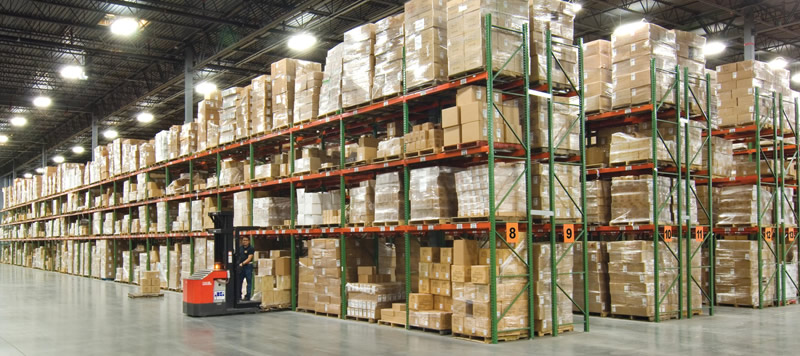
Selective teardrop rack keeps every pallet position directly accessible. Use it as a baseline when comparing systems for a mixed assortment, especially where quantities differ substantially from one SKU to another. Begin with a pallet-position list rather than dividing the building into identical bays without reference to inventory.
Tall storage requires the same attention to beam spacing as any shorter arrangement. The clear height and forklift lift establish limits, but the load heights determine how useful the levels will be. Review the maximum pallet weight alongside each specified configuration instead of assigning a capacity from appearance.
Santa Fe Pallet Rack supplies new material and helps compare the options against the inventory.
Load Ratings, Aisles, and the Drawing
Common selective dimensions include 42-inch uprights for 48-inch-deep pallets, 96-inch beams for two 40-inch pallets, and 144-inch beams for three. A 108-inch beam is another available length. Capacity needs a separate check: beams are rated per pair per level, while frames depend on height and beam spacing.
The heaviest pallet sets the load basis, and load plaques should accompany the capacity discussion. Truck selection sets aisle requirements. Planning ranges are about 12–13 feet for counterbalance, 8–10 feet for reach equipment, and 5–6 feet for very narrow aisle equipment; actual truck requirements govern the final layout.
Drive In Pallet Rack for Bulk Inventory
Drive-in storage is aimed at bulk quantities with relatively few SKUs. Compare that operating pattern with the assortment you actually hold. A large pallet total spread across many items is different from a large quantity of a few items, even when the overall position requirement looks similar.
For dated stock requiring first-in, first-out handling, pallet flow is a separate product consideration. Do not treat flow, pushback, and drive-in as interchangeable density choices. Rotation requirements and item quantities should narrow the field before beam sizes or bay counts are finalized.
Pushback Pallet Racking for Repeated Loads
A push back racking system holds pallets two to six deep and operates last-in, first-out by SKU. This can be considered for groups with enough repeated inventory to occupy deeper lanes. Determine those quantities before deciding that an entire storage area should use the same lane depth.
Keep separately accessible items in the comparison. A layout can assess selective positions beside deeper lanes so the choice follows actual stockholding patterns. The question is not simply how many pallets fit, but whether the required pallets remain accessible in the order the operation needs them.
Plan the Rack and the Move Together
Pallet Rack Questions for South Valley
Send Your Pallet Sizes. Start With a Layout.
Plan your South Valley rack job: clear height, loaded pallet dimensions and forklift reach set the layout.